
Introduction
This article delves into an extensive exploration of the concept of evolution in its original scientific understanding. It aims to dissect and elucidate the precise conditions, applicability, and limitations of the evolutionary theory, meticulously highlighting its gaps and areas where insight remains lacking. The initial section meticulously dissects the scientific underpinnings of evolution, providing a comprehensive understanding of its theoretical framework and inherent limitations.
Moving forward, the article transitions into the Islamic perspective on evolution, particularly focusing on the traditional narrative of Adam and Eve’s origin as presented in Islamic teachings. This section meticulously examines the verses within the Holy Quran that expound upon the creation of Adam, endeavoring to construct a narrative that emanates purely from the Quranic verses, devoid of cultural biases or ambiguities.
Subsequently, the article proceeds to reconstruct the Islamic belief system, meticulously analyzing the plausibility of aligning evolution with the teachings of the Holy Quran. Emphasizing the enigmatic and mystical nature of the Quran, this section asserts the potential harmony between the evolutionary theory posited by modern science and the tenets outlined in Islamic teachings. It underscores the criticality of interpreting the Quran without biases while refraining from limiting its interpretation based on scientific, cultural, or political ideologies.
Section 1: What is Evolution?
The Concept of Evolution
Evolution in every facet is an omnipresent force, an unceasing current that pervades all aspects of existence. It persists unfailingly, orchestrating continuous change and adaptation across the vast spectrum of the universe. At its core, evolution encapsulates the fundamental concept of transition, the perpetual shift from one state to another, shaping the diverse tapestry of life and matter.
Evolution signifies the ongoing metamorphosis from one state to another. This process is ceaseless and ubiquitous, extending its influence across every realm of existence, be it organic or inorganic. The very term ‘evolution’ itself signifies this transition, a continuous journey inherent to all things, undergoing perpetual change.
In the organic sphere, life pulsates with evolution as organisms grow, respire, mature, and eventually wane with time. Human beings exemplify this: from infancy to adulthood and onward. Everything undergoes a relentless evolution, an undeniable transformation occurring constantly before our eyes. Even inorganic entities succumb to the inevitable march of change – they decompose, oxidize, rust, and alter form. This continuous process of transitioning from one form to another embodies the essence of evolution, manifesting itself in myriad ways, regardless of the pace of change.
From a metaphysical perspective, the very fabric of existence intertwines with the necessity of evolution. Our universe unfurls along the linear trajectory of time, dictating that existence inexorably moves forward on this temporal continuum. Stagnation becomes an impossibility within this framework. In a literal and metaphysical sense, static existence contradicts the essence of being; evolution emerges as an imperative thread woven into the very fabric of existence itself.
Hence, the fundamental premise of evolution lies in the intrinsic nature of progression, the perpetual flux from one state to the next, underpinning the essence of life, matter, and the universe itself.
The Biological Evolution – The Theory of Evolution
Evolution – Definition and Criteria
Within the realm of biological phenomena, the scientific understanding of evolution often faces misinterpretation and oversimplification, leading to misleading assertions like ‘humans descended from apes.’ Such broad statements foster ambiguity and inaccuracies within the scientific framework of evolution. The biological definition of evolution delves into intricate criteria and specific conditions that must be met for a phenomenon to qualify as evolution. Let’s scrutinize the academic definition and dissect the stringent criteria it entails.
The academic definition of evolution unfolds as follows: Evolution signifies a spontaneous genetic mutation that transpires within a population across generations. This definition, however, carries a spectrum of specific criteria and conditions, pivotal for classifying any change as evolution.
Firstly, evolution mandates that any alteration occurring must be inherently random. Nature does not selectively engineer these changes to benefit a species, unlike the concepts associated with Lamarckian evolution. It’s crucial to differentiate between these evolutionary paradigms, Darwinian and Lamarckian, which we’ll delve into in later sections.
Secondly, the change in question must manifest at the genetic level. It cannot be a mere physical or habitual alteration; it needs to be an alteration within the genetic code itself.
The third criterion stipulates that this genetic change must occur within a population rather than an isolated individual. It must persist across the entire population, not confined to a single entity.
Lastly, for a change to qualify as evolutionary, it must be heritable, passed down from one generation to the next. This propagation ensures the continuity and perpetuation of the altered genetic trait within the population.
These stringent criteria delineate the scientific concept of Darwinian evolution, setting the fundamental parameters that any genuine evolutionary phenomenon must meet.
Natural Selection – Survival of the fittest
Beyond the strict criteria defining evolution, the essence of Darwinian evolution pivots on the concept of natural selection and the survival of the fittest. In this paradigm, species undergo random mutations, occasionally producing a mutation that confers an advantage within their environment. Consider the renowned case of giraffes—within the framework of Darwinian evolution, they did not incrementally lengthen their necks, as Lamarckian evolution might propose. Instead, a subset of giraffes might have experienced a random genetic mutation leading to longer necks.
This fortuitous mutation bestowed an advantage, enabling easier access to foliage. As these giraffes reproduced, the longer neck trait became desirable and proliferated, eventually establishing a subpopulation of giraffes with elongated necks. Their increased access to food allowed them to thrive, while giraffes with shorter necks faced diminished sustenance and extinction. Darwinian evolution postulates that these random genetic mutations, leading to advantageous traits, drive the evolution of entire populations, favoring those possessing beneficial characteristics.
According to Darwinian principles, natural selection operates by favoring populations with more advantageous traits, shaping the dominance of certain species in their environments. This process eliminates less suitable characteristics, allowing species with favorable traits to thrive and emerge dominant. Charles Darwin famously illustrated such principles in his book ‘On the Origin of Species.’ Darwin observed the adaptation of finches’ beak shapes on the Galapagos Islands. He noted that different beak shapes evolved in response to varying food sources available to the finches on different islands. This observation underscores the mechanism of natural selection in action, showcasing how advantageous traits enable species to better survive and flourish within their ecological niches.
Common Decent
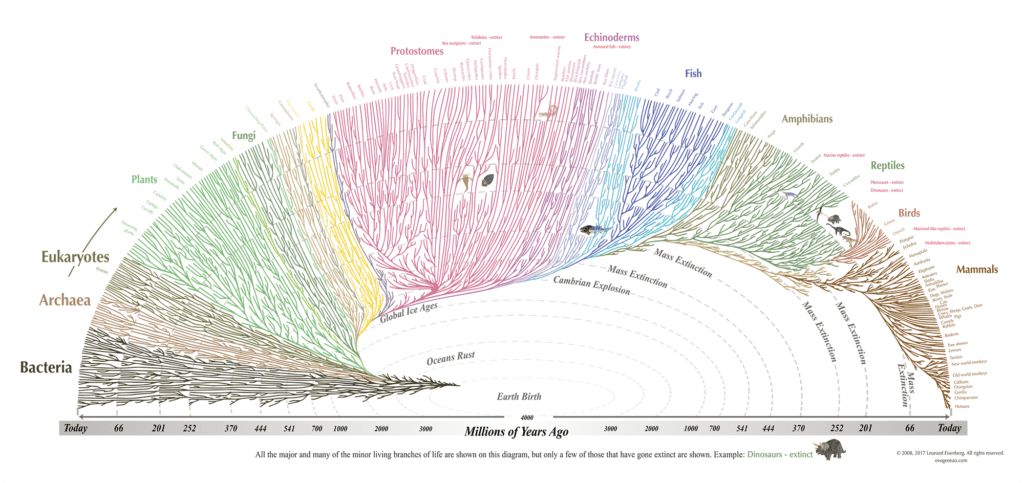
Another crucial part of the theory of evolution is the concept of common decent. Darwin’s concept of common descent serves as a crucial element that connects the mechanisms of genetic mutation and natural selection to the broader narrative of evolutionary diversification. It begins with a population of a particular species. Imagine one individual within this population undergoing a genetic mutation. If this mutation provides an advantage in its environment, it gets passed down to its offspring, gradually becoming a stable genetic trait within that population.
Now consider this occurrence unfolding repeatedly over time – numerous mutations accumulating within a population. Each mutation leads to the formation of new subspecies, altering traits and characteristics as these populations adapt to their specific environments. Picture Population A, evolving with several hundred mutations, leading to the emergence of several hundred subspecies, each uniquely shaped by its environment.
Furthermore, these subspecies continue to undergo further mutations, perpetuating a cascade of evolutionary changes. Picture different environments influencing each subspecies differently – some near the sea, others within dense forests, or exposed to various predators and challenges. Consequently, different subspecies thrive in their respective environments, further diversifying as they adapt to their specific ecological niches.
This continual process, occurring across various populations (like Population B), environments, and successive generations, leads to an ever-branching tree of life. With each generation, new mutations and adaptations occur, resulting in drastic differences between successive subspecies and, eventually, the birth of entirely distinct species.
To illustrate, envision this as a branching tree with countless branches diverging from a common trunk. Each branch represents a unique population or subspecies, gradually diverging due to distinct mutations and environmental influences. Over vast spans of time, these divergent branches culminate in the vast diversity of life forms on Earth today.
Darwin’s concept of common descent encapsulates this overarching idea – that every species alive today shares a common ancestry, tracing its origins back to a singular, ancestral species. This visualizes life’s diversity as interconnected branches on the tree of life, each branching point signifying evolutionary divergences that have led to the myriad species inhabiting our planet.
Darwinian vs Lamarckian Evolution
At this stage, it’s essential to dispel misunderstandings and oversimplifications surrounding evolution, delving into historical contexts to illuminate the prevailing scientific understanding. The universally accepted scientific understanding of biological evolution, known as Darwinian evolution, was chiefly hypothesized and championed by Charles Darwin. Preceding Darwin’s seminal work, Lamarck proposed another evolutionary concept known as Lamarckian evolution. These ideas were significant for their time, although they had certain theological influences prevalent in the scientific discourse of the era.
Lamarckian evolution presented a more intricate and appealing explanation of evolution, illustrating species adapting and shaping themselves in response to their environment, supposedly leading to species advancement. For instance, Lamarckian thought often used the giraffe as an illustrative example, suggesting that giraffes stretched their necks to reach higher foliage, passing on elongated necks to future generations. However, it’s crucial to emphasize that Lamarckian evolution lacks scientific evidence supporting the inheritance of acquired traits and has been widely discredited in modern biology.
In contrast, Darwin’s paradigm proposed a different mechanism involving random genetic mutations and natural selection. According to Darwinian principles, advantageous traits resulting from random genetic mutations provide a survival advantage, leading to their propagation in subsequent generations.
It’s important to highlight the chronological sequence, emphasizing that Lamarck’s ideas preceded Darwin’s formulation of natural selection. While Lamarck’s ideas had theological influences, they were not explicitly theological but developed during a time when religious interpretations significantly impacted scientific thought.
In essence, the distinction lies in Lamarckian evolution’s unsupported notion of acquired traits being inherited, contrasted with Darwinian evolution’s reliance on the mechanism of natural selection based on random genetic variations. This distinction is also important because the modern accepted understanding of evolution is wholly Darwinian and not Lamarckian.
The Credibility of Evolution Theory
Is Evolution a Fact or a Theory?
The status of evolution as both a scientific fact and a theory is fundamental to understanding its place in the scientific realm. At its core, the factual nature of evolution is grounded in an extensive array of empirical evidence amassed over centuries of scientific inquiry. This evidence spans multiple disciplines, including paleontology, genetics, comparative anatomy, embryology, and molecular biology, providing a robust foundation supporting the reality of evolutionary change. Fossils document transitional forms, showcasing the gradual changes in species over vast periods. Genetic studies reveal shared molecular mechanisms among diverse life forms, offering compelling evidence of common ancestry. Additionally, observations of natural selection in action, coupled with experiments and field studies, affirm the processes that drive changes in populations over time.
However, the term “theory” in scientific terminology often leads to misunderstandings. In scientific parlance, a theory represents a comprehensive and coherent framework that integrates and explains numerous observations and facts. Evolutionary theory serves as this framework, explaining the mechanisms underpinning the observed phenomena, such as genetic variation, mutation, natural selection, and speciation. It unifies the diverse evidence into a cohesive explanation for the diversity of life on Earth. While the factual basis of evolution is supported by an overwhelming amount of evidence, the term “theory” denotes the broad explanatory scope and predictive power that characterizes our understanding of evolution. It’s essential to recognize that in the scientific context, a theory does not imply uncertainty; rather, it represents the pinnacle of scientific understanding, constantly refined and expanded upon with new evidence and discoveries. Therefore, evolution as a scientific fact stands firmly supported by empirical evidence, while evolutionary theory serves as the comprehensive framework that elucidates and unifies our understanding of the processes driving life’s diversity.
A Demonstration of Evolution
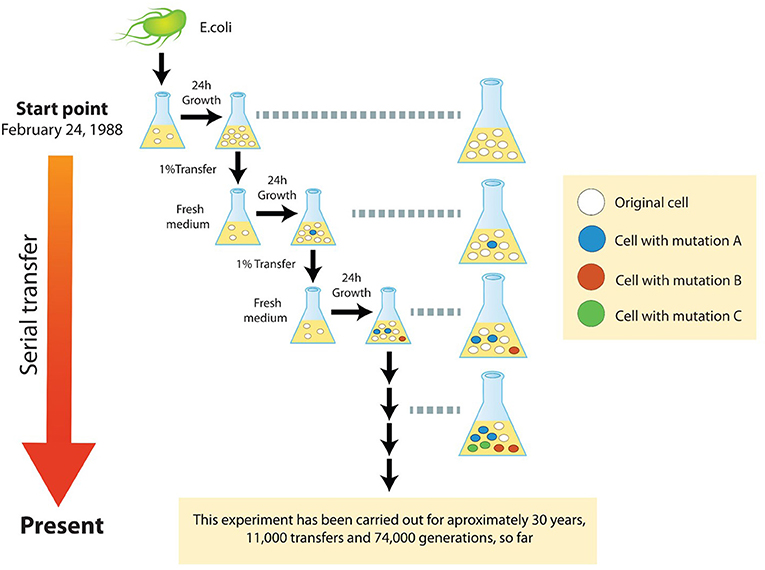
In laboratory settings, scientific experiments can vividly illustrate the processes central to evolutionary theory. Consider a controlled study employing bacterial populations subjected to a carefully controlled environment featuring a gradual introduction of a potent dying agent. Initially, most bacteria might succumb to this environmental stressor. However, through iterative rounds of exposure, an intriguing pattern emerges. A subset of bacteria, owing to random genetic mutations, develops a resilience to the dying agent, surviving and reproducing. Over successive generations within a short timeframe – as rapid as thirty minutes or five generations – the bacterial population transforms noticeably. Those bacteria carrying beneficial genetic mutations enabling resistance to the dying agent become dominant. This experiment showcases the dynamics of natural selection in action. It vividly illustrates how within a controlled environment, selection pressures drive the evolution of bacterial populations, leading to observable changes in their genetic composition. These controlled trials serve as compelling evidence, exemplifying evolutionary principles such as genetic variation, selection, and adaptation – all happening within the confines of a laboratory, mirroring the fundamental mechanisms guiding life’s diversity.
The Limitations of Evolution Theory
Abiogenesis: The Enigma of Life’s Origins
At the foundational level, the mystery of abiogenesis remains an intricate puzzle. The transition from inanimate matter to the genesis of life remains a realm largely uncharted in scientific understanding. Despite promising theories exploring chemical processes, prebiotic chemistry, and self-replicating molecules as potential precursors, a definitive explanation for life’s emergence from non-life is still elusive. The absence of a clear understanding of this epochal event poses a significant limitation in comprehending life’s evolutionary journey.
Tracing the Tree of Life: Missing Links in Evolutionary History
In the pursuit of reconstructing the entirety of life’s evolutionary history, challenges emerge in the form of ‘missing links.’ Fossil records, while offering glimpses into the past, exhibit gaps in the direct ancestral connections between species, particularly in the earliest stages of life. The lack of complete transitional forms within the ‘tree of life’ impedes a seamless understanding of the evolutionary relationships and transitions between different life forms, casting shadows over crucial evolutionary transitions.
Complexity and Biological Systems: Unraveling Evolutionary Intricacies
Understanding the intricacies of complex biological systems stands as another limitation in evolutionary comprehension. The roles of complex networks, regulatory mechanisms, and the influence of epigenetics in shaping evolutionary trajectories present ongoing challenges. The intricate interplay between genetic makeup, environmental factors, and phenotypic expressions adds layers of complexity, necessitating further exploration to elucidate their roles in evolutionary processes.
Mutations: The Mystery of Nature’s Imperfections
While scientific understanding explains mutations as errors occurring during DNA replication, a deeper insight into the root cause of these ‘mistakes’ remains elusive. The ‘why’ behind these errors within nature’s seemingly flawless processes is a compelling enigma. The occurrence of mutations, essential for genetic variation and ultimately evolution, presents a paradox: the dependence of life’s existence on mistakes during DNA replication. The scientific ‘what,’ ‘how,’ ‘when,’ and ‘where’ of mutations remain well-explored, yet the ‘why’ remains an elusive and baffling mystery.
These limitations underscore the boundaries of our current scientific knowledge, emphasizing the need for continued research and exploration to unravel the complexities surrounding life’s origins and the intricacies guiding evolutionary processes.
Section 2: The Islamic Outlook of Evolution
The Traditional Story
The traditional narrative of Adam and Eve within the Islamic framework is deeply rooted in the belief system of many Muslims and is often conveyed as the foundational story of human existence. According to this widely held view, God fashioned Adam, the first human, from clay and created Eve from Adam’s rib. Both were placed in the blissful realm of Jannah (paradise) and were permitted to enjoy its bounties except for a specific tree or fruit, the consumption of which was prohibited by God’s command.
The Islamic tradition elucidates that Shaitaan (Satan) cunningly tempted Adam and Eve, inciting them to defy God’s directive and partake of the forbidden fruit. As a consequence of their disobedience, they were expelled from the paradisiacal abode and descended to Earth, marking the beginning of their mortal journey. This narrative highlights their transition from the celestial realm to terrestrial existence due to their act of disobedience and succumbing to temptation.
A core element of this traditional story underscores the belief that the entirety of humanity traces its lineage back to Adam and Eve, who, after their expulsion, propagated and gave rise to subsequent generations.
Apart from the Quran and Hadith, various Islamic texts, commentaries, and scholarly interpretations contribute to the elaboration and transmission of this account. These sources often reinforce and expound upon the narrative by offering additional context, explanations, and cultural significance attributed to Adam and Eve’s story within Islamic teachings and literature.
The portrayal of Adam and Eve’s creation, their time in paradise, their transgression, and subsequent expulsion serves as a cornerstone in Islamic teachings, reflecting the foundational aspects of human conduct, the concept of accountability, and the consequences of disobedience in the sight of God.
Constructing the Islamic Narrative
In this segment, we aim to assemble a comprehensive catalogue delineating the Islamic authentic scriptures that recount the narrative of Adam and Eve, ensuring a meticulous compilation devoid of redundancy. The objective is to facilitate a critical reevaluation and subsequent reconstruction of the genuine storyline encompassing the tale of Adam and Eve within the Islamic tradition.
The Story of Adam and Eve
The following compilation of verses aim to present a hollistic account of the narrative mentioned in the Quran about the initial story of Adam and Eve:
وَقُلْنَا يَـٰٓـَٔادَمُ ٱسْكُنْ أَنتَ وَزَوْجُكَ ٱلْجَنَّةَ وَكُلَا مِنْهَا رَغَدًا حَيْثُ شِئْتُمَا وَلَا تَقْرَبَا هَـٰذِهِ ٱلشَّجَرَةَ فَتَكُونَا مِنَ ٱلظَّـٰلِمِينَ And We said: O Adam! Dwell thou and thy wife in the Garden, and eat ye freely (of the fruits) thereof where ye will; but come not nigh this tree lest ye become wrong-doers.
فَأَزَلَّهُمَا ٱلشَّيْطَـٰنُ عَنْهَا فَأَخْرَجَهُمَا مِمَّا كَانَا فِيهِ ۖ وَقُلْنَا ٱهْبِطُوا۟ بَعْضُكُمْ لِبَعْضٍ عَدُوٌّۭ ۖ وَلَكُمْ فِى ٱلْأَرْضِ مُسْتَقَرٌّۭ وَمَتَـٰعٌ إِلَىٰ حِينٍۢ But Satan caused them to deflect therefrom and expelled them from the (happy) state in which they were; and We said: Fall down, one of you a foe unto the other! There shall be for you on earth a habitation and provision for a time.
فَتَلَقَّىٰٓ ءَادَمُ مِن رَّبِّهِۦ كَلِمَـٰتٍۢ فَتَابَ عَلَيْهِ ۚ إِنَّهُۥ هُوَ ٱلتَّوَّابُ ٱلرَّحِيمُ Then Adam received from his Lord words (of revelation), and He relented toward him. Lo! He is the relenting, the Merciful.
قُلْنَا ٱهْبِطُوا۟ مِنْهَا جَمِيعًۭا ۖ فَإِمَّا يَأْتِيَنَّكُم مِّنِّى هُدًۭى فَمَن تَبِعَ هُدَاىَ فَلَا خَوْفٌ عَلَيْهِمْ وَلَا هُمْ يَحْزَنُونَ We said: Go down, all of you, from hence; but verily there cometh unto you from Me a guidance; and whoso followeth My guidance, there shall no fear come upon them neither shall they grieve.
The Holy Quran, Chapter 2, Verses 35 – 38
This is the first set of verses in the textual order of the Quran in which the account of Adam and Eve being expelled from paradise is introduced. Despite this account recurring across various Quranic verses, such as 7:19 and 20:120, this particular passage holds a level of detail that contributed significantly to the traditional narrative of Adam and Eve’s expulsion from Heaven. The conventional story, shaped largely by this passage, aligns with the basic premise: Adam and his spouse resided in Paradise, prohibited from consuming a specific fruit. However, enticed by Satan, they disobeyed God, leading to their banishment from Paradise.
Nevertheless, this narrative raises substantial discrepancies or gaps, prevalent in the traditional story but absent in this specific Quranic passage. One notable omission is the explicit identification of whether this Garden corresponds to the Paradise (Jannah) commonly understood or represents a distinct entity. The crux lies in this story’s rejection of evolution, asserting Adam and Eve as the first human beings, created in their human form without evolutionary predecessors, dispatched to Earth from a celestial realm. Yet, this essential detail remains implicit in the passage.
Below, a passage from the book “The Study Quran”, a compilation summarizing various Islamic commentaries (Tafsirs) over time, adeptly addresses these missing elements and gaps within the original passage, aspects typically filled by our traditional narrative.
The story of the fall of Adam and Eve from Paradise appears here and in 7:19–25 and 20:120–23. Relative to Genesis 2–3, the Quranic account gives fewer details. Some commentators mention an array of details about Adam, Eve, the Garden, and the fall, many of which find their origin in Jewish and Christian, and perhaps even Arab, oral traditions. Many of these traditions describe Eve (Ḥawwāʾ), who is referred to as Adam’s wife rather than Eve in the Quran; the kind of tree or plant from which Adam and Eve ate (apple vs. some type of grain); what form Iblīs took; and even where they were first exiled. But some of these details are not attested to very strongly in the Ḥadīth, and some (such as some registered by al-Ṭabarī) do not rise above the level of folklore. The Quran itself provides the foundation and details of the story of Adam and Eve, which has a different meaning in Islam than in Judaism or Christianity.
The Garden in which Adam and Eve dwelled is indeed paradisal; they would neither hunger therein, nor go naked, . . . neither thirst therein, nor suffer from the heat of the sun (20:118–19), in addition to experiencing the unconstrained enjoyment of the Garden’s fruits, as mentioned in this verse. Eating from the tree, according to Iblīs, would have made them angels, or able to live forever (7:20), and in 20:120 he promises them the Tree of Everlastingness and a kingdom that never decays. Among the possibilities offered for the type of tree are grain, grapevine, and fig. (The Quran never uses the word “fruit” in this context, but says only that they ate from the shajarah, a word that can include also vegetative growth such as trees, shrubs, and bushes.)
One view (R) has it that the promise of eternal life mentioned in 7:20 and 20:120 would have had no attraction if Adam were already dwelling in the “Garden of Rewards,” which the Quran promises to believers. The command to get . . . down (v. 36) is the same verb used in v. 61 (Go down to a town . . .), where it does not imply a vertical descent, but a change in location. Moreover, those who enter the Garden will not be expelled therefrom (15:48). Also, if Adam were created from earth, then where is the ascent from earth to Heaven in this account? The commentator al-Qurṭubī (who is not of this opinion) also mentions that the Quran says of the Garden, They hear therein neither idle talk nor lying (78:35), and yet Iblīs did lie to them, which is indeed how he caused them to be expelled from it. These considerations would seem to indicate that this is a different Garden from the “Garden of Rewards.”
The consensus view, though, is that the Garden of Adam and the promised Garden are the very same (R, Q). It is not “a” garden, but “the” Garden (al- jannah), “well known” as the eternal Garden promised to believers. Some respond to the opinion that Iblīs could not have lied in the Garden by arguing that he could have whispered to them from somewhere outside the Garden, and that the promise never to be expelled applies only to those granted entry to Paradise after their sojourn on earth as a reward for their good deeds (Ṭs).
Surveying these options, al-Rāzī offers this final possibility: “These are all possible, and the textual proofs are weak and contradictory; so one should cease, and refrain from being categorical. And God knows best.” On this and similar issues (such as Eve’s creation and entry in the Garden) he takes a similar attitude, that one cannot know for sure, and one does not need to know, as this is not central to the Quranic telling of the account.
The metaphorical meaning of made them stumble is the same in both Arabic and English: a falling into sin or error. The command get you down is in the second-person plural, which grammatically can apply to Adam and Eve or to Iblīs as well. The interpretation most in keeping with the Quranic text understands the addressees to be Adam and Eve and all their progeny, sometimes including Iblīs and his progeny, with Adam and Eve representing humanity as a whole.
The dwelling place (mustaqarr) has been understood as a place to live, as in the earth as an abode (40:64, using qarār, a word of similar derivation) or as a reference to earthly graves, although other uses of mustaqarr in the Quran (e.g., 6:98; 25:24; 36:38) indicate the former.
For a while (lit. “until a moment”) can signify either earthly death, the Day of Resurrection (which is the end of the world and humanity’s dwelling on earth), or “an appointed time” (ajal). It should be noted that this “fall” is not tied to the idea of “original sin,” which Islam does not accept.
Some understand words as a reference to the supplication of Adam and Eve: Our Lord! We have wronged ourselves. If Thou dost not forgive us and have Mercy upon us, we shall surely be among the losers (7:23). Another account mentions that Adam beseeched God, “Did you not make me vicegerent? Did you not breathe into me of Thy Spirit? Does Thy Compassion not outstrip Thy Wrath?” God’s response of “Yea” to each of these questions and His informing Adam that he was forgiven constitute the words that Adam received. Others say that God taught Adam and Eve the pilgrimage, and the pilgrimage was the words. Still others claim it was a prayer (presumably given to Adam by God to recite), “There is no god but Thee! Glorified be Thee, praised be Thee! Thou knowest evil, and I have wronged myself. So forgive me! Thou art the best of forgivers!” This is repeated again, substituting “mercy” and “repentance” for “forgiveness” in the formulation (R).
In Arabic the verb for “repent” and “relent” (tāba/yatūbu) is the same; its meaning changes only with the addition of a preposition. Tawbah, the noun derived from the verb, means literally a “turning” or a “return”: we turn or return to God in repentance, and He turns or returns to us. Similar passages in the Bible (Jonah 3:9; Jeremiah 15:6; Genesis 6:6) predicate a kind of “repentance” of God. Al-Tawwāb (the Relenting) is the intensive participle of tawbah, meaning “repentance”; see also 4:17–18c; 4:147c.
The opinion that the progeny of Adam are addressed here assumes that the guidance is the prophets and teachings (bayān) and is of course in keeping with a major theme of the Quran; namely, that God is ever guiding humanity. Others have limited the address to Adam, Eve, and Satan.
- The Study Quran
The passage forthrightly acknowledges the Quran’s limited provision of explicit details regarding the story of Adam and Eve, highlighting the attribution of many associated details to Jewish, Christian, or even Arab traditions. Moreover, it underscores that certain scholarly works from those times essentially represent folklore rather than authenticated scriptural content. Consequently, various religious and cultural narratives have intertwined to construct the traditional story, elements of which the Quran itself does not explicitly articulate.
A significant emphasis is placed on the potential divergence between the garden in this narrative and the Paradise (Jannah) commonly perceived within Islamic doctrine. Drawing on supporting verses from the Quran, the passage cogently suggests that the depicted garden may not align with the understood concept of Jannah.
The interpretation of “going down” following their expulsion is highlighted as not necessarily implying a vertical descent, challenging the assumption of a celestial abode from which Adam and Eve descended to Earth. Scholars propose that this garden might have been a terrestrial location, emphasizing that the Quran doesn’t unambiguously affirm Adam and Eve’s residence in a cosmological celestial Paradise, whether it corresponds to Jannah or another celestial entity, material, or immaterial in nature.
Although there are hints in the Quran alluding to the nature of this Jannah, scholarly opinions incline towards a material interpretation due to certain qualities described in the story, a perspective distinct from the metaphysical notion of Jannah.
It’s imperative to recognize that despite a long-held consensus aligning with the traditional narrative of a cosmological Jannah, such details aren’t explicitly mentioned in the Quran. Formulating theological beliefs or dismissing scientific hypotheses like evolution based on such interpretations of the Quran is cautioned against, considering the lack of explicit textual support.
Al-Razi’s perspective underscores this uncertainty, highlighting the inability to firmly conclude details absent in the Quranic text. Insisting on a cosmological Jannah or denying it outright based on conjecture not supported by Islamic scripture remains unfounded. Rejecting scientific theories like evolution without substantial scriptural backing is cautioned against, as it’s not inherent to Islamic teachings.
Furthermore, the passage emphasizes Adam’s plea for forgiveness, a Quranic affirmation that contradicts the Christian concept of original sin. Unlike the Christian belief, Islam does not entail humanity being inherently sinful due to Adam’s transgression; Adam sought forgiveness and was pardoned, absolving his progeny from bearing the burden of that original sin.
It is important to note, as mentioned above, that there are several other verses of the Holy Quran that also mention this account of Adam and Eve’s expulsion from Paradise. But, as the scholars mentioned in the passage above from the Study Quran, even all those passages combined do not give enough detail to create or construct the traditional story that is otherwise propagated. Hence, to avoid redundancy, those verses of the Holy Quran that repeat the same account without additional detail to this specific scope will not be discussed. However, other accounts in the general concept of evolution that introduce other details worth examining will be discussed in subsequent sections.
How Exactly Was Adam Created?
The first contradiction arises from the traditional narrative requiring Adam and Eve to be the inaugural humans descending to Earth from a celestial paradise, which directly contradicts the theory of evolution. The conventional story implies that human civilization initiated on Earth with Adam and Eve, whereas evolutionary theory posits that life, including humans, evolved from a common ancestor on this planet. This discrepancy suggests an incompatibility between the two concepts: the celestial descent of Adam and Eve versus the evolutionary origin of life on Earth.
However, as previously demonstrated, the Quran does not explicitly state that Adam and Eve descended to Earth from a celestial paradise. This absence of explicit textual affirmation allows for an interpretation that aligns with the evolutionary perspective. The Quran neither affirms nor denies a celestial origin for Adam and Eve, leaving room for a reconciliation between the Islamic narrative and the theory of evolution.
Nonetheless, an inherent discrepancy persists between the theory of evolution and the Islamic perspective. Despite the exclusion of Adam’s lineage from a celestial paradise, Islamic doctrine posits that Adam’s creation differs fundamentally from the scientific narrative in a metaphysical sense. To elucidate, a closer examination of the authoritative sources within the Holy Quran delineates the precise manner of Adam’s creation as perceived in Islamic teachings.
In one set of verses the Quran explicitly states the creation of man from a “mud”, as quoted below:
وَلَقَدْ خَلَقْنَا ٱلْإِنسَـٰنَ مِن صَلْصَـٰلٍۢ مِّنْ حَمَإٍۢ مَّسْنُونٍۢ
Verily We created man of potter’s clay of black mud altered,
وَٱلْجَآنَّ خَلَقْنَـٰهُ مِن قَبْلُ مِن نَّارِ ٱلسَّمُومِ
And the jinn did We create aforetime of essential fire.
وَإِذْ قَالَ رَبُّكَ لِلْمَلَـٰٓئِكَةِ إِنِّى خَـٰلِقٌۢ بَشَرًۭا مِّن صَلْصَـٰلٍۢ مِّنْ حَمَإٍۢ مَّسْنُونٍۢ
And (remember) when thy Lord said unto the angels: Lo! I am creating a mortal out of potter’s clay of black mud altered,
فَإِذَا سَوَّيْتُهُۥ وَنَفَخْتُ فِيهِ مِن رُّوحِى فَقَعُوا۟ لَهُۥ سَـٰجِدِينَ
So, when I have made him and have breathed into him of My Spirit, do ye fall down, prostrating yourselves unto him.
The Holy Quran, Chapter 15, Verses 26 – 29
The Quran mentions this creation in several places, with the most detail here. Once again, the explanatory remarks from the Study Quran discuss, and for the most part agree with this idea of creation from mud, even emphasising that this is very simmilar to the earthen mud:
The clay from which human beings have been created is variously described as simply clay (6:2); a draught of clay (23:12); a viscous clay (37:11); and dried clay, like earthen vessels (55:14); see 55:14c. Elsewhere, the jinn are described as created from smokeless fire (55:15).
The narrative in vv. 28–43 describing the fall of Iblīs from Heaven is similar to the one in 38:71–85; these two accounts are the only ones in which there is no specific reference to Adam. Other accounts throughout the Quran situate the story of Iblīs in the context of the creation, temptation, and banishment of Adam from the Garden; see 2:30–39; 7:11–25; 17:61–65; 20:115–24. The opening verse of the account here is almost identical to 38:71, the major difference being that the latter has clay whereas this verse has molded mud (see 23:12c). God tells the angels in these two verses that He is going to create a human being, but in 2:30 He informs them that He is going to place a vicegerent upon the earth (for the meaning of vicegerent in this context, see 2:30c.). Although the human being or vicegerent refers to Adam, it also represents humanity as such; see 7:11c.
This verse is identical to 38:72; cf. 32:9. I have proportioned him is understood to be a reference to God’s creating the human being in the most perfect manner in order to receive His Spirit (Z); cf. 95:4: Truly We created man in the most beautiful stature. In interpreting I . . . breathed into him of My Spirit, many commentators see My Spirit as a reference to God’s Power, though others take the phrase more literally as the Spirit (al-rūḥ) and see it as explaining why Iblīs would be called upon to bow before Adam; see 38:72c.
God’s commanding the angels to bow before Adam is an essential part of the Quranic account of his creation; see 2:34; 7:11; 17:61; 18:50; 20:116; 38:73–74. The angels’ bowing implies that before falling from Heaven, human beings occupied a station higher than that of the angels, or that the angels were bowing to God but taking Adam as their qiblah (i.e., the direction of prayer); see 7:11c. See also 12:100, where Joseph’s family bows down to him in fulfillment of his dream in 12:4.
However, aside from this, in another verse God also states explicitly that he created Adam with his “two hands”.
قَالَ يَـٰٓإِبْلِيسُ مَا مَنَعَكَ أَن تَسْجُدَ لِمَا خَلَقْتُ بِيَدَىَّ ۖ أَسْتَكْبَرْتَ أَمْ كُنتَ مِنَ ٱلْعَالِينَ He said: O Iblis! What hindereth thee from falling prostrate before that which I have created with both My hands? Art thou too proud or art thou of the high exalted?
The Holy Quran, Chapter 38, Verse 75
The explanation in the Study Quran, however seem to disagree with this being a literal expression of “two hands”:
In 7:12, God asks, What prevented thee from prostrating when I commanded thee? That God created the human being with His two Hands is understood in a symbolic manner, since God’s Command when He desires a thing is only to say to it, “Be!” and it is (36:82; cf. 2:117; 3:47; 6:73; 16:40; 19:35; 40:68). Thus some take the creation of the human being with God’s two Hands as an allusion to the greatness of the human being (Q) or as an allusion to two of God’s Attributes (Q), God’s Majesty and Beauty, God’s Dominance and Gentleness (qahr wa luṭf), or all of the Divine Names that fall under the two categories of Dominance and Love (K), which would then allude to the human being as the locus in which such attributes become manifest. The rhetorical question posed by God to Iblīs would then mean, “Are you truly a creation more exalted than this creation?”
It is crucial to underscore that the Quran employs explicit and unequivocal expressions delineating Adam’s creation, specifying elements such as the utilization of mud as a component and referring to the method as “creating with my own two hands.” However, scholars of Tafsir have adopted a cautious approach, primarily adhering to criteria aligned with the correct Islamic Aqeedah (the creed or belief system) while refraining from exhaustive discussions on the scientific plausibility, potential symbolic interpretations, empirical or non-empirical aspects, or the metaphysical versus materialistic nature of these descriptions. Their primary focus centers on alignment with the correct Aqeedah in Islam, without delving extensively into rational or scientific interpretations.
This scholarly stance, while emphasizing alignment with Islamic beliefs, has led to a lack of rigorous exploration into the compatibility of these descriptions with empirical or scientific narratives. Consequently, contemporary challenges arise wherein scientific theories face undue scrutiny, ostensibly due to conflicts with Islamic teachings. However, these conflicts predominantly emerge from traditional or alternate interpretations, thereby constructing narratives that contradict modern scientific hypotheses, rather than an inherent contradiction within the Islamic concept itself.
Section 3: Reconstructing the Islamic Belief System
The Plausibility of Evolution
In the midst of the varied interpretations of Quranic verses that may either correspond or seemingly conflict with the notion of evolution, it is worthwhile to examine specific verses frequently cited by proponents of evolution to highlight Quranic parallels with evolutionary concepts. Certain verses within the Holy Quran have been extensively quoted by advocates of evolutionary theory to assert a potential correlation between Quranic discourse and the principles of evolution.
The Holy Quran States:
أَوَلَمْ يَرَ ٱلَّذِينَ كَفَرُوٓا۟ أَنَّ ٱلسَّمَـٰوَٰتِ وَٱلْأَرْضَ كَانَتَا رَتْقًۭا فَفَتَقْنَـٰهُمَا ۖ وَجَعَلْنَا مِنَ ٱلْمَآءِ كُلَّ شَىْءٍ حَىٍّ ۖ أَفَلَا يُؤْمِنُونَ Have not those who disbelieve known that the heavens and the earth were of one piece, then We parted them, and we made every living thing of water? Will they not then believe?
The Holy Quran, Chapter 21, Verse 30
The Study Quran provides a detailed explaination:
Some see this “rending asunder” as a reference to God’s making the earth into seven earths and the heaven into seven heavens, as alluded to in 65:12 (T), or to God’s pulling apart of the heavens and the earth, which were originally “connected” or “adjacent” (T). It may also mean that the heavens and the earth used to be a single thing, and then God separated them with the air and wind (Q). For others this verse means that the heavens are rent asunder by rain, and the earth by the vegetation that grows as a result of that rain (Q, T). This latter interpretation is preferred by some, because of the phrase that follows, And We made every living thing from water (R). Another interpretation is offered by Abü Muslim al-Isfahäni: sewn together (ratq) symbolizes the state of things before the creation of the world, where in a sense “nothingness” was all of a piece and nothing could be distinguished from anything else; rent asunder (fataqna, from fatq) then symbolizes the act of creation, in which realities once joined together in “nonexistence” come to be separate from each other as they take on existence and individual identity (R).
Another opinion is that this means that the heavens and the earth were at first dark and then were illuminated, signifying that night preceded day (R). As a spiritual allegory, the heavens represent the spirit and the earth represents the faculties of the soul; the waters of the spirit penetrate the earth and cause wisdom and piety to grow; the mountains are the intelligence, which anchors the soul and keeps it from going adrift; and the paths between them represent the inward spiritual life directing human beings toward God (Aj).
The creation of things from water is also mentioned in 24:45: And God created every beast from water; and 25:54: And He it is Who created a human being from water. See 24:45c. The phrase in this verse could also be rendered, “It is by water that We make things live” (R, Z). For some, water refers to reproductive fluids (M).
According to one cosmological image found in the Islamic tradition, the earth floats upon water and would move about as if it were a ship on the sea, were it not for the firm mountains anchoring it (cf. 16:15; 31:10; R). Wide tracts renders fijäj, which are thought to refer to wide paths (R, Z). Between them (referring to the mountains) renders fih, which is understood by some to mean “upon it,” where the pronoun refers to the earth, so that the translation would be “wide tracts upon [the earth]” (R), which are placed so that people may be guided to their destinations on earth or to an awareness of God’s Oneness after reflecting upon them (R).
The interpretation and translation nuances within the aforementioned verse highlight a fundamental ambiguity in the Quranic language. The verse, which mentions the creation of everything from water, does not explicitly delineate whether it signifies the emergence of all humanity or creation from water. It remains open to multiple interpretations, ranging from supporting biogenesis—a premise suggesting that all life evolved from a single cell in water—to implying that life initially emerged within a watery environment as evolving species, or even suggesting that individual life is sustained by water, considering that a major component of sperm, the origin of life, is water.
This intricate diversity of interpretations underscores the complexity of deriving a singular, definitive meaning from such verses. It serves as a cautionary note against rigidly imposing particular interpretations on Quranic text, especially to align with contemporary scientific theories. While the Quran may contain profound philosophical and scientific insights, it is imperative to approach its interpretation with conscientiousness. This entails ensuring that interpretations do not deviate from the essence of the Quran to fit contemporary scientific paradigms. Instead, the focus should be on maintaining authenticity and fidelity to the original sources—a scholarly exegesis that eschews forced or biased interpretations.
The Metaphysics of Belief
In understanding the profound nature of religious beliefs as encapsulated within the Quran, it’s essential to embark on an exploration that traverses beyond the realm of empirical constraints. The Quran, revered as the sacred text of Islam, represents not merely a compendium of historical events or empirical facts but rather an intricate tapestry of wisdom, guidance, and spirituality that transcends temporal, cultural, and scientific limitations. This multifaceted scripture encompasses layers of meaning, inviting believers to delve into its depths to extract profound insights relevant across ages and cultures.
A fundamental aspect to grasp is the inherent flexibility of interpretation embedded within the Quranic verses. This flexibility allows for a rich tapestry of diverse perspectives, enabling interpretations that harmonize with varying philosophical, theological, and even scientific paradigms. However, this interpretative latitude can sometimes give rise to misconstrued notions when attempts are made to forcefully align Quranic teachings with contemporary scientific knowledge or societal norms. Such efforts often overlook the Quran’s mystical and transcendental nature, seeking instead to constrict its teachings within narrow empirical frameworks.
Consider, for instance, the enigmatic Quranic verse that alludes to the creation of everything from water. This verse, while evoking the origin of creation from water, presents an ambiguity that defies simplistic interpretation. It does not explicitly delineate whether it refers to the literal genesis of life or metaphorically underscores the pivotal role of water in sustaining life. This ambiguity allows for diverse interpretations, spanning from scientific propositions of biogenesis to symbolic representations of water as a source of life’s essence. Attempting to confine such verses within the rigid confines of contemporary scientific theories disregards the inherent depth and plurality of meanings encapsulated within the Quranic text.
Further complexity emerges when contemplating the Quranic narrative surrounding Adam, considered the progenitor of humanity. The depiction of Adam’s creation, his habitat, and his descent onto Earth remains shrouded in interpretative ambiguity. Extensive scholarly discourse revolves around whether Adam signifies a singular human figure or symbolically represents the collective essence of humanity. Additionally, deliberations persist regarding the celestial or terrestrial nature of Adam’s abode, the composition of his physical form, and the interplay between metaphysical realities and empirical evidence. Such deliberations exist within scholarly realms without concrete empirical validation, emphasizing the transcendent and multifaceted nature of these Quranic narratives.
The Quranic discourse encompasses a plethora of concepts—from celestial paradises and infernal realms to angels, demons, and the divine entity itself—that transcend the boundaries of empirical knowledge and rational comprehension. These entities represent profound metaphysical truths that elude complete human understanding, offering instead symbolic glimpses into their existence.
Consequently, attempting to confine these transcendent and metaphysical concepts within the rigid confines of empirical or scientific paradigms proves to be an exercise in futility. The Quran’s intention is to elevate human consciousness, offering glimpses of profound truths beyond empirical realities. Endeavoring to force-fit these transcendental concepts within empirical constructs undermines their inherent profundity and purpose.
Thus, the quintessential takeaway revolves around acknowledging and venerating the metaphysical nature of beliefs encapsulated within the Quran. These teachings beckon believers to embark on a journey of contemplation, introspection, and spiritual enlightenment. Embracing this perspective necessitates an approach that refrains from rigidly imposing empirical constraints, allowing the Quran’s inherent mysticism and profundity to permeate one’s understanding and spiritual journey.
Conclusion
In conclusion, this extensive exploration underscores the necessity of interpreting the Quran in its purest essence, devoid of biases or limitations imposed by empirical, cultural, or political influences. It accentuates the metaphysical nature of belief systems encompassed within the Quran, emphasizing their divergence from empirical ideologies. The crux lies in acknowledging the Quran’s enigmatic nature, fostering an approach that preserves its intrinsic mysticism while appreciating its potential harmony with contemporary scientific theories like evolution. Ultimately, this holistic understanding encourages a balanced perspective, free from constraints, enabling a deeper comprehension of both religious teachings and scientific principles.


Aslamo alaikum first you have done a great job secondly I didn’t got answer about does Quran completely rejects evolution or just have given a Theory of creation of beings and nature from water??